
Good day Naturalistas and welcome back to the Jostylin blog. After this post, you’re going to understand the best natural hair regimen for low porosity 4C hair. I guarantee you that your hair will change after using my tips.
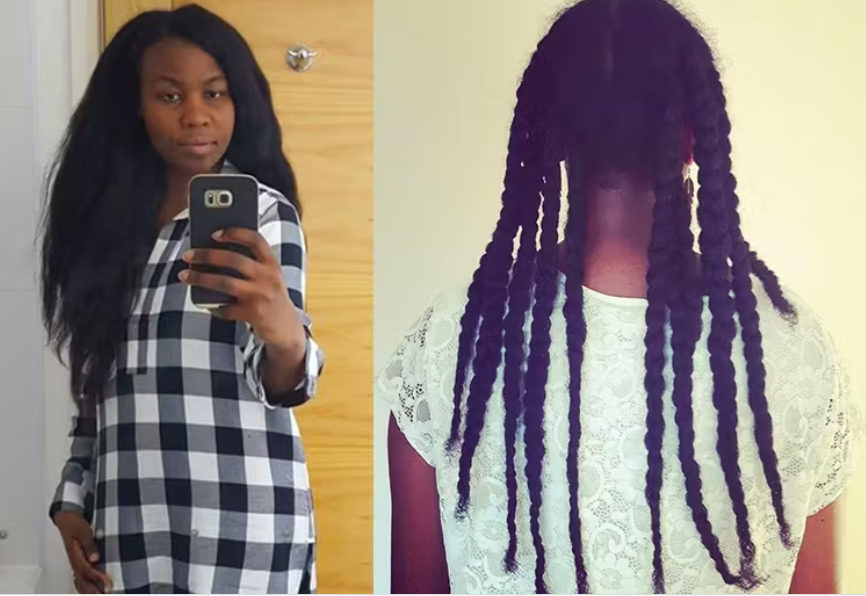
Although I have been natural for 15 years, I don’t write much about hair porosity and hair care because I am a firm believer that trial and error is the best way to look after your natural hair. I managed to grow my hair long twice (see image below) and I didn’t follow any guidelines about porosity. However, I do understand why YOU need to. And I have researched enough about hair porosity to know exactly what your hair needs.
I will start off with very briefly explaining what low porosity hair is then I will explain the regimen. Continue reading, and don’t forget to check out my hair shop, where you can find some delicious natural hair growth products. You can purchase organic and unrefined Batana oil. I also sell wholesale batana oil from Honduras as well as organic Chebe powder, and wholesale ambunu powder.

What Is Low Porosity Hair?
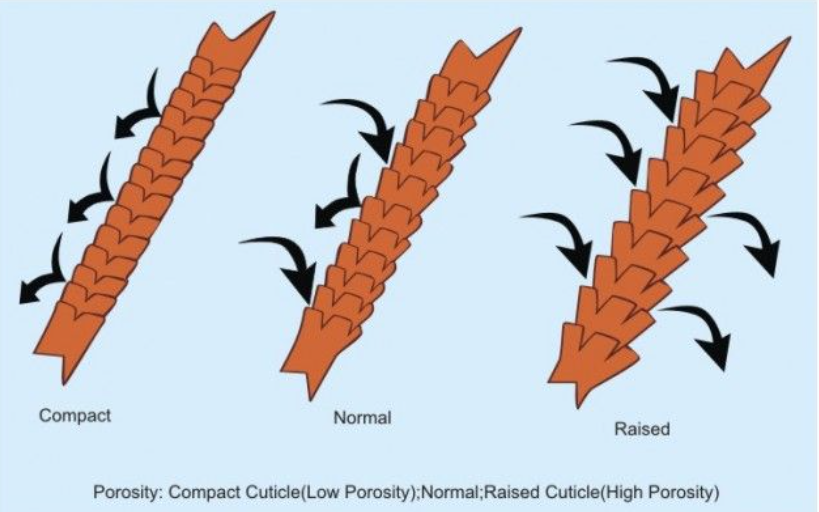
Having low porosity hair means your hair has a hard time absorbing moisture. If the porosity of your hair is low, it will take 3-4 minutes for a strand of hair to sink completely in a cup of water, or it will totally remain floating on top.
This type of hair indicates that your cuticle is tightly bound which makes it difficult to penetrate moisture and hair products. Moisture not only has difficulty entering your hair strands, but also has difficulty leaving, which is a good thing because this means when it hydrates well, it will stay hydrated longer.
Low Porosity Natural Hair Regimen For 4C Hair
Here is my magic low porosity hair regimen, which you should follow religiously.
1. Moisturize Hair ONCE A WEEK With A Watery Leave In Conditioner
Yes, you read that right. Only moisturise your hair ONCE A WEEK with a VERY WATERY leave in conditioner. You then follow up with a moisture retention pomade. I created the Jostylin Naturals Hair Softening milk and pomade duo for this exact reason. I am not just selling my products for the sake of it, but I know it works and the reviews on my Etsy page says it does. I will explain exactly how it works in the video below, but it’s important to understand why you should use this technique.
Firstly, you benefit from using a watery (liquid-based) conditioner on low porosity 4C hair because your hair cuticles are tightly closed, making it harder for moisture to penetrate. Thick creams coat your hair too quickly. They sit on top of the hair instead of absorbing properly, which leads to buildup without real hydration.
A watery conditioner helps moisture enter the hair shaft more effectively. According to this study, afro hair types have less water content and when combined with low porosity, this makes lightweight hydration methods more effective than heavy products. You also use a watery conditioner because low porosity hair responds better to hydration when the cuticle is slightly lifted. According to this study published in the journal Polymers, conditioning agents combined with water improve elasticity and reduce breakage by increasing internal moisture levels—something low porosity hair needs but often struggles to achieve.
Using a conditioner only once a week helps prevent product buildup, which is a common issue with low porosity hair. Heavy creams coat your strands too quickly and blocks moisture entering. Because your cuticles are tightly packed, products don’t absorb easily and can accumulate quickly on the surface.
Also, conditioning your hair too often—especially without proper cleansing—can leave your hair feeling coated, dull, and resistant to moisture. According to this study by the National Center for Biotechnology Information (NCBI) – “Hair Cosmetics: An Overview”, buildup from repeated product use can block effective penetration of conditioning ingredients and negatively affect scalp health.
Jostylin Naturals Hair Softening Milk & Length Retention Duo
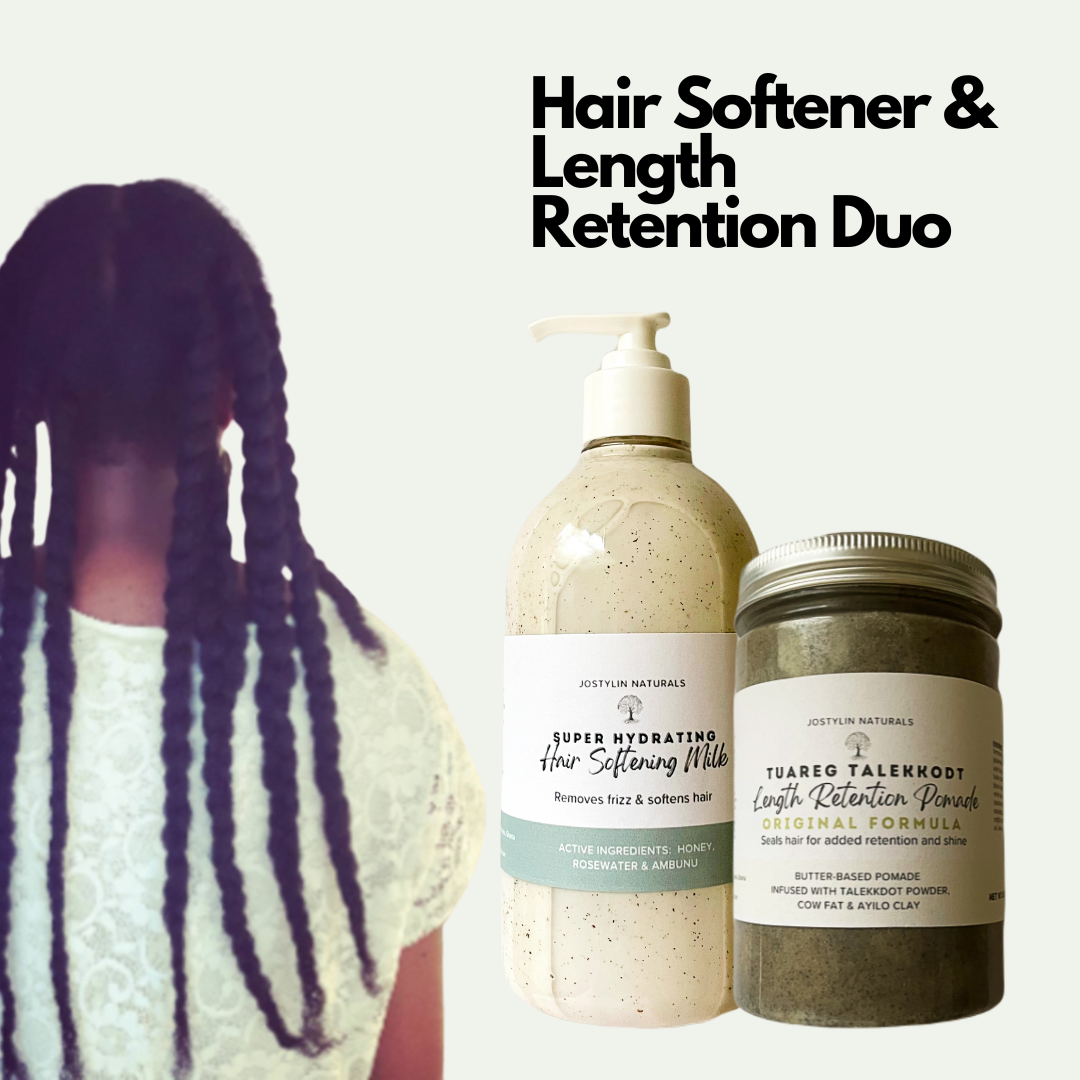
Instead of moisturising your hair everyday, the trick is to use a layering technique by first moisturing your hair after washing, then using a length retention pomade to seal in the moisture. You only need to make sure you wash your hair weekly to eliminate any product build-up and ensure water gets back into your hair.
From my perspective, conditioning and sealing once a week gives your hair enough time to absorb, retain, and benefit from moisture without overwhelming it. It allows you to follow a balanced routine—cleanse, hydrate, then seal—without constantly layering products that your hair may not absorb. Over-conditioning, especially with frequent wetting, can also lead to hygral fatigue, where the hair weakens from repeated swelling and shrinking. Excessive moisture cycles can reduce hair strength over time. That’s why a structured weekly routine tends to work best for maintaining strong, healthy low porosity 4C hair.
I have explained more about it in the video below.
How to Moisturize Low Porosity Hair Weekly
To moisturize low porosity hair weekly & effectively, the best way to learn is experimenting with different application methods to see which is best for you. As I said earlier, the two most common methods of moisturising hair used in the natural hair community are the ‘LCO method’ & the ‘LOC method’. Some people say that the LCO method is best for low porosity hair. But I think the LOC method is also good. I will run through both methods briefly.
L = Liquid
C = Cream
O = Oil
LCO method
The steps to follow are:
L – Add a liquid to the hair that provides hydration, it can be simply water or a water based leave-in conditioner.
C – Apply a cream. * If in step 1 you have already applied leave in, you can skip this step.
O – Finally, add an oil or butter is sealed to retain hydration in the hair.
This technique is the most common, which is usually adopted as a starting point in the care of natural afro hair, although in most cases it requires re-applying products every so often – from a couple of times a day to each 2 or 3 days- to keep the hair hydrated.
If you notice that your hair does not absorb the conditioner you can first blow dry your hair to help open the cuticle and make it easier for the product to absorb.
LOC Method
The second method of moisturizing low porosity hair is with the LOC method. The idea of the LOC method is that each layer seals the previous one. This method is ideal to retain moisture and keep the hair hydrated for several days, in some cases up to 5 days, without the need to re-apply products. The steps to follow are:
L – Add water or, a leave-in conditioner that uses water as a base.
O – Seal by applying a light coat of oil. I recommend those that can penetrate the hair such as coconut, avocado and olive oils. Although it can also be done with butters.
C – This time is resealed with cream, for this step you can use butters or light oils not necessarily with water base *.
* There are those who say that in the “true” LOC method in this step you can only use butter or the “typical ointment or fat wax” with petroleum jelly or mineral oil.
You can make your own leave in conditioner at home or purchase one from the hair shop. To find out if my leave in conditioner is suitable, check out my article: Best Leave In Conditioner for Natural Hair Growth.
2. Wrap Hair with A Satin Bonnet at Night
To avoid constant dryness of hair caused by over exposure to harsh environmental factors, make sure you wrap your hair at night. At night, I would advice you to wear a satin bonnet infused with oils while you sleep. First make sure your hair is slightly and well nourished with a mix of leave in conditioner and water. A satin or silk scarf is recommended as they do not absorb oil like other fabrics. Don’t forget that you can also use a silky pillowcase to avoid oil getting sucked out of your hair while you sleep.
You can also try the Fulani Silk Scarf Method or simply use a regular satin bonnet. The Fulani silk wrap Youtube tutorial wrap video is below to watch.
3. Use A Clarifying Shampoo
Using the best natural hair growth products for black hair and type 4 hair is essential. This also includes shampoos. Clarifying or purifying shampoos serve to perform a deep cleaning of the hair. These shampoos detoxify the hair and clean it thoroughly to eliminate any type of residue. They are formulated to perform a deep cleaning of the hair since they eliminate the accumulation of other products in the hair. This type of shampoos are necessary to detoxify the hair just like we do with our skin.
How often to wash low porosity hair?
How often should a cleansing shampoo be used? The reality is that it depends on each type of hair, but it is normally used when the hair products you use do not give you results. As a general rule, if you have oily hair you can use it once a week. If you have normal hair you can use it every 15 days.
4. Protective Style Hair Daily
As mentioned above, one of the biggest problems with low porosity 4B & 4C hair is the inability to absorb moisture. So it is a good idea to protective style your hair often. As our hair is always exposed to environmental factors such as wind or heat, protective styling ensures that all the moisture is locked in your hair, to keep your afro hair healthy, moisturised and frizz free.
Choose a fun and comfortable protective hairstyle such as braids or twists to wear throughout the day.
Protective styles are also great, as they can also be worn out if you want to let your hair down and have fun later at night
When protective styling with artificial hair, aim to have more natural hair than artificial hair within each braid. This helps avoid any pulling effect that causes damage.
5. Use Butters & Oils
Caring for hair with low porosity requires the use of emollients or cosmetic butter and oils with a firm consistency. This includes such as shea butter, jojoba oil or coconut oil, sunflower oil, babassu oil, mango butter and moisturizers such as glycerin or honey that attract and retain moisture. The firmer oils are better absorbed into the hair because they contain small molecules.
Opt for natural hair growth products that contain heavier oils and butters. For more information on using oils for natural hair growth, read my other articles titled:
For help on which essential oils can grow your hair faster and healthier, whilst preventing breakage, I have written some articles on:
- Coconut oil for natural hair growth
- Olive oil for natural hair growth on black hair
- Homemade hot oil treatment for natural hair growth
- Best oils for natural hair growth
- Castor oil for natural hair growth on black hair
- Hemp oil for natural hair growth
- Best oils for natural hair growth
6. Only Have Protein Treatments Once A Month
Proteins rarely need to be added to low porosity hair as too much of it can quickly dull and dry hair. Having the cuticle so tight is predisposed to accumulate protein-rich products and these can leave a stiff feeling in the hair. So I recommend only 1-2 protein treatments a month.
When doing oil or protein treatments, it can be difficult since the hair scales are very tight, the moisture cannot penetrate properly. Try to first wrap your hair in a warm towel (best before put on a plastic hood). The warmth opens the cuticle of the hair and the active ingredients of the hair cure can penetrate and unfold better.
DIY Deep Conditioner for Low Porosity Natural Hair
Just as with protein treatments, deep conditioning low porosity hair should only be done without the use of too much protein ingredients. The best way to deep condition low porosity hair is to use a water based deep conditioner mixed with oils. The one I would recommend for low porosity hair is the Cassia tea and castor oil treatment.
Recipe & Instructions:
- Boil one cup of hot water and pour in a cup. Add a pinch of Cassia leaves in the cup.
- Mix some one tablespoon of castor oil into the of luke warm cassia water.
- Add some 2 drops of Rosemary oil.
- Pour in a spray bottle and apply it to your hair from the roots to the ends and massage.
How to apply the treatment:
- First divide your hair neatly into six sections, with three sections on each side. The aim is to apply whole treatment to the hair by moving in sections.
- Apply the treatment all over your the hair and massage your scalp. This massage will increase blood circulation, which is an important application that promotes hair growth.
- Tie your hair with a silk scarf. This will heat your hair naturally
- Wash your hair with shampoo and apply a leave in hair cream.
- This hair will help oils penetrate faster in low porosity hair. For more deep conditioner recipes, read my article on Homemade deep conditioner for natural hair.
Use this regimen only as a guide, whilst keeping in mind that there are other factors that influence your hair’s behaviour such as:
Your hairs texture
Chemical treatments
The thickness of the hair
Curling level.
If it is damaged.
The level of hydration.
As you know, each person’s hair has different specific needs and our hair does not always stay the same. It changes with the passage of time, habits and environmental factors. We all have set backs with our hair care methods, no matter how hard we avoid them. However, there are certain basic things you can do to ensure your hair care regimen is correct, whilst using the best natural hair growth products for black hair.