

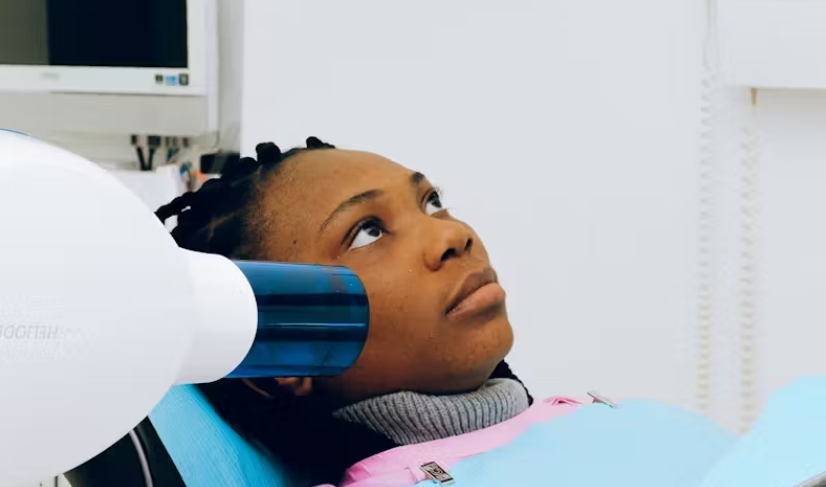
No fluff and no miracle promises here, just the honest basics on laser treatment for dark spots on black skin and what so many of us wish we’d known before booking. I’ve been rocking my natural hair for 15 years and I run Jostylin Naturals, where I make and sell natural hair products and gentle West African botanicals. If you’d like a softer everyday routine, browse the shop, and please read this alongside advice from a dermatologist who has experience with darker skin.
Laser treatment isn’t a quick fix for dark spots, but in experienced hands some types of laser can help with hyperpigmentation on darker skin. They also carry a real risk of leaving darker marks, so here’s what I’ve learned about laser treatments for dark skin hyperpigmentation, and what to ask before you book.
Key takeaways
- Some lasers can be used on darker skin in experienced hands, but they carry a higher risk of dark marks and burns.
- Nd:YAG lasers at lower settings over several sessions are among those most often used on Black skin.
- Ablative lasers like CO2 are linked to more dark marks and scarring on skin of colour.
- Results vary, most people need several sessions, and sun protection afterwards matters.
- Always choose a dermatologist with real experience treating darker skin.

What is a laser?
Laser is an acronym for Light Amplification by Stimulated Emission of Radiation. This device generates a very narrow and intense beam of high energy light (wavelength) and can be used for several purposes such as drilling, surgery, communication, recording, etc. Lately, it has become a popular option for skin concerns such as acne scars, age spots, dark spots, fine lines and wrinkles.
Whatever you decide about lasers, harsh scrubbing can leave more dark marks on our skin, so I keep my everyday cleansing gentle. I stock Grewia mollis root bark and powder (tideje), a mucilaginous West African bark that makes a soft, soothing wash, and I use it on my own acne-prone skin. It won’t fade dark spots and it isn’t a treatment, just a gentle step between any professional care.

What are the various laser options?
There are two primary cosmetic laser treatments; ablative and non-ablative lasers. Ablative lasers are more intense and damage the top layer of the skin, while non-ablative lasers work beneath the skin with minimal damage to the top layer. All laser treatments either fall under the ablative and non-ablative laser options.
Are lasers safe for black women?
Lasers can be used safely on black skin in experienced hands, but they carry more risk for us. The challenge is that there is a higher risk of absorbing laser energy due to the level of melanin involved. This situation leads to thermal injury and further hyperpigmentation. You can avoid this accident by choosing a qualified and well-experienced laser surgeon who has extensive knowledge and training with dark-skinned patients. Also, ensure that they are equipped to approach your surgery with care.
So, where does the misconception come from?
As it is with all medical procedures, mistakes happen once in a while. With laser treatments, laser burn resulting in darker skin is a possibility. Even though certain types of lasers have a higher risk for discoloration and cell damage, with the recent advancement of technology, more precise and safe laser devices are cropping up. They are well equipped to reduce absorption and damage to the darker populace.
What skincare concerns can lasers treat?
Lasers have been in the picture for decades to treat several health issues, including skincare problems. Lately, they have become a popular option for several cosmetic purposes. Some of the skincare concerns that can be treated with laser technology include:
- Unwanted hair
- Vascular lesions
- Acne and acne scars
- Leg and varicose veins
- Skin rejuvenation
- Pigmented lesions
- Tattoos
- Precancerous lesions
Which laser is best for black skin?
There is a higher risk of pigmentation for dark-skinned people undergoing laser treatment. As such, the best laser treatments for black skin should use lower intensities applied over several sessions. This precaution is useful in reducing the risk of missed targets and their effects. YAG lasers, such as Nd: YAG, are among those most often used on African American skin, but there’s no single best laser for everyone.
You should talk to your dermatologist to figure out the best, personalized treatment that will work for you. For your safety, it is best to avoid high-beam lasers and IPL therapy.
Is a laser safe for dark skin?
It can be, with the right diagnosis, treatment settings and expert, but the risk of dark marks and burns is higher on our skin. Be sure to consult with a specialist with adequate experience in treating dark-skinned patients.
Laser treatment for dark spots on black skin
If you’re wondering about dark spots, laser treatment is one option a dermatologist may discuss. There are several types of laser treatments used for dark skin hyperpigmentation and dark spots, and please get a dermatologist’s advice on which, if any, suits you. The main types are:
Nd: YAG (neodymium-doped yttrium aluminum garnet)
This is one of the lasers most often used for dark spots, and it is often considered one of the better-suited options for darker skin. It involves a flash tube or laser diode which pumps the laser beams over the pigmented area. That process further breaks it down into tiny particles. The wavelength emission used here is at 1064nm in the infrared, which is often considered gentler on darker skin, though the risk of dark marks doesn’t go away completely.
Results vary, and most people need several sessions. It can also be used for hair and spider vein removal on the face and legs.
Pulsed dye laser
Pulsed dye lasers are mainly used for redness and visible blood vessels, and are sometimes used for acne marks, sunspots and age spots. Please ask a dermatologist whether it suits darker skin. It works by targeting a beam of concentrated yellow light on the tiny blood vessels beneath the skin, causing them to shrivel. You may need between three to six sessions to see results.
Fractional (Fraxel) lasers
This is a relatively new approach for dark skin hyperpigmentation. It is often used for superficial acne scars, and can also be used for wrinkles. Here, the skin is exposed to microscopic laser spots that alter the appearance of damaged skin by creating tiny wounds for new collagen fiber formation.
As healing takes place, new and firmer collagen fibers are formed to give the skin a rejuvenated appearance. On darker skin it still carries a risk of dark marks, so ask your dermatologist about gentle settings.
CO2 laser
This laser is often used for deep acne scars, but research links ablative lasers like CO2 to a higher risk of dark marks and scarring on darker skin. It was also one of the earliest gas laser treatments developed. It produces infrared light with a principal wavelength of 9.6-10.6 micrometers. There is even an improved version of the CO2 laser, which is the fractionated CO2. It uses an ultra pulse to remove thin layers of skin to treat various skin conditions.
Erbium: YAG
This method works on collagen, and it’s often used for age spots, fine lines and wrinkles. Some dermatologists use Erbium: YAG on African American skin at careful settings, but it is still a resurfacing laser, so ask about the risk of dark marks. It equally has a faster recovery time when compared to the CO2 laser resurfacing method.
What the research says about laser treatment for dark spots on black skin
- A 2026 review of 2,010 facial laser complication cases found that skin types IV–VI made up about 62% of the dark-mark (PIH) complications, and that pigment problems lasted longer, especially after ablative resurfacing (study).
- A 2024 review found ablative lasers like CO2 are linked to dark marks and scarring in darker skin, and higher energy settings added risk without better results, so I’d always ask about this before booking (study).
- A 2024 systematic review of 46 studies on dark marks in skin of colour found no treatment worked reliably for everyone. Laser fully cleared marks in some people but made others worse, which is why I’d go to an experienced dermatologist (study).
Laser Treatment for Dark Spots on Black Skin: My Final Thoughts
Having blemish-free skin is a thing of pride, and with so many remedies floating around, laser treatment is one option worth understanding. Laser treatment can be safe for darker skin in experienced hands, but it does carry a real risk of dark marks, so it’s worth taking your time over the decision. With all the information provided here, you’re in an excellent position to make an informed choice about the route you take. At the end of the day, the success of the procedure is hinged on sound research. So, make sure you consult a well-informed, qualified, and experienced physician before you make a final decision.
Altogether, looking good is not just about skincare, don’t stop there. Amp up your hair care routine and even your makeup game. In that vein, don’t forget to share this article and share your black spot remedies in the comment box below.
Laser Treatment for Dark Spots on Black Skin: Frequently Asked Questions
What is the best dark spot remover for African American skin?
When it comes to dark spot removers, there are so many out there for African American skin. However, when selecting a potent dark spot remover for your skin, look out for specific components. Ingredients often used for dark spots include vitamin C, glycolic acid, adapalene (Differin gel), kojic acid and azelaic acid, alongside a good moisturiser and daily sunscreen. Hydroquinone should only be used under a doctor’s or dermatologist’s guidance (it’s prescription-only in the UK and banned in cosmetics in the EU/UK).
Does laser scar removal work on dark skin?
According to some research, laser scar treatment can work on dark skin when the laser surgeon applies the right precautions, though the risk of dark marks is real. To be on the safe side, consult a dermatologist for a good recommendation. Here’s what to expect; the procedure involves removing a specific portion of your skin and allows new and tighter cells to form.
How can I remove dark spots from black face?
Laser treatments and the rest are not the only way to tackle dark spots; home remedies are an option too. Some people like gentle natural ingredients such as aloe vera gel and milk. I’d avoid lemon, baking soda or toothpaste on the face — they can irritate and darken melanin-rich skin. A dermatologist is the best person to ask about dark spots. Home remedies take time, though, so if you are looking for a faster solution, speak to a dermatologist to prescribe a personalized medical treatment for your face.
Chemical peels, cryotherapy (freezing with liquid nitrogen solution), and laser skin resurfacing therapy are some of the options your dermatologist may prescribe.
What can a dermatologist do for dark spots?
There are several options for dermatological treatment for dark spots on the face or other parts of the body. These include laser surgery, skin lightening creams, chemical peels, micro-needling, and microdermabrasion.
What causes scars to turn dark?
Scars are a normal part of life, and they form as part of the process of wound healing. When a scar gets super dark, it is referred to as a hyperpigmented scar. What causes it? On melanin-rich skin, the inflammation from a spot or injury often triggers extra melanin. This is called post-inflammatory hyperpigmentation, and sun exposure can make it darker. If a wound looks red, hot, swollen or infected, please see your doctor.
How do you lighten dark scars?
As mentioned earlier, you can lighten dark scars using natural or medical remedies. Some people like massaging coconut oil or vitamin E into a healed scar, then washing it off with warm water, and find it helps scars look softer over time. Others like a little honey on a healed scar, though the evidence for fading dark marks is limited, so patch test first and keep it off open wounds.
I’d avoid lemon, baking soda or toothpaste on the face — they can irritate and darken melanin-rich skin. If you prefer a dermatological treatment, speak to a qualified dermatologist. Surgery, laser therapy, skin lightening creams, etc. are some of the available options they may prescribe for your dark scars.
How long does it take for brown spots to fade after laser?
After laser treatment, brown spots may begin to fade within 7-14 days and then gradually over the next several weeks, although results vary. You may see the full results of the laser treatment over 6-12 months. Your dermatologist is likely to advise you to stay away from sunlight for at least six weeks post laser surgery for the best outcome.
How do you get rid of dark scars fast?
There’s no safe way to get rid of dark scars fast, and on melanin-rich skin they usually take months to fade. A dermatologist can tell you whether a procedure suits you. If you’d like a gentle massage oil for a healed scar, some people like a mixture of oils. Form a mix of three tablespoons of extra virgin olive oil and three drops of lavender essential oil. Gently massage into the scar for about five minutes. Leave the mixture to soak into your skin for about 30 minutes.
Next, rinse with warm water. Essential oils like lavender can irritate some skin, so patch test first. Alternatively, some people find aloe vera gel soothing: apply it to the healed scar in gentle circular motions and wash it off after 30 minutes. Neither will make a scar disappear, so be patient with your skin.
Do scars get darker as they heal?
The natural process of healing results in the initial darkening of scars. The good news is that as the scar ages, it will gradually fade naturally.
Do dark scars go away?
Though your scar will naturally fade off, it will depend on the severity and location of the injury. Scars can go away between three to six months naturally for less severe cases. In some cases, scars may take up to one or two years or even more to heal and fade completely. Unfortunately, some more severe spots may never go away naturally but may yield to medical procedures.
Are scars black?
Depending on the stage of healing and your skin type and color, your scar may turn black. Scars can also be dark brown, brown, or red.
How long do scars take to fade on the face?
Scars on the face may take a few months to a few years to naturally fade depending on the type of injury, its location, and severity. Some scars may not fade at all and will need medical intervention to get rid of them.
Can turmeric help with dark spots?
Turmeric is traditionally used in face masks across South Asia and beyond. It contains curcumin, which early research suggests may affect pigmentation, and it has anti-inflammatory properties. It won’t get rid of dark spots on its own, and it can stain and irritate some skin, so patch test first.
If you’d like to try turmeric in a gentle mask, here are some traditional recipes:
- Mix two tablespoons of turmeric powder, a tablespoon of rice or chickpea flour, two tablespoons of milk, and a tablespoon of honey to form a mask. Apply the mask on the affected area for 15 to 20 minutes and rinse with a face cleanser. Moisturize your skin after. You can repeat this a few times a week.
- Mix two tablespoons of flour, one tablespoon each of turmeric powder and almond oil with three tablespoons of milk. Apply the mask to your face and rinse it off with water after 15 minutes. It’s a gentle mask I like, but it isn’t a dark spot treatment.
- Mix one tablespoon of honey with a pinch of turmeric powder. Next, apply this enriched mask on your face or any skin area with dark spots. Leave the mask on for about 20 minutes. Wash it off with lukewarm water. You can repeat this a few times a week.
Does apple cider vinegar get rid of dark spots?
You’ll often see apple cider vinegar recommended for dark spots because it contains acetic and malic acids, but there’s little good evidence that it fades them. Vinegar is very acidic, and I wouldn’t put it on the face, neat or mixed half and half with water, because it can burn and irritate, and irritation can leave darker marks on melanin-rich skin. A dermatologist is the best person to ask about dark spots.

Hi, I’m Joanna. I’ve been natural for 15 years and I founded Jostylin Naturals, a London-based shop for natural hair care and West African botanicals. On this blog I share what I’ve learned about 4C hair, length retention and the plants West African women have used for generations, honestly and in plain English. Nothing here is medical advice, so please speak to your doctor about any health concerns.