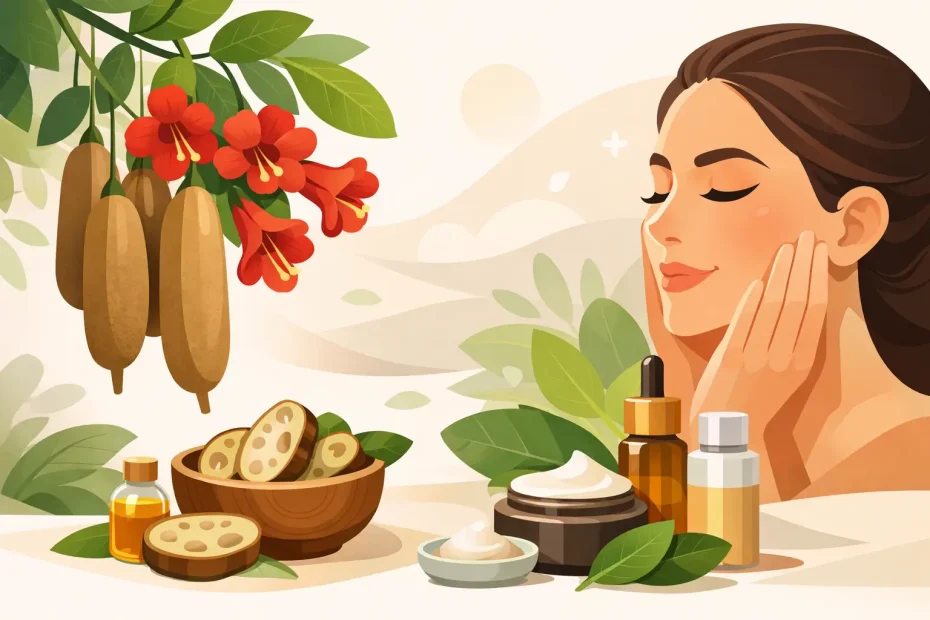
If your skin does not respond well to trendy actives, over-fragranced creams, or routines that ask too much and give too little, kigelia africana is worth your attention. This African botanical has a long history in traditional care practices, and today it shows up in oils, creams, serums, and body treatments for one simple reason – many people use it to support skin that looks calmer, firmer, and more even.
I like kigelia africana because it sits at the intersection of cultural knowledge and practical skincare. It is not a miracle ingredient, and it will not replace a consistent routine. But when it is well formulated and used regularly, it can be a meaningful addition, especially for skin that needs support with texture, dryness, and visible signs of stress.
What is kigelia africana?
Kigelia africana is the fruit of the sausage tree, native to parts of Africa. In beauty and wellness spaces, the fruit extract is the part most often used in topical skin products. You will usually see it blended into creams, body oils, masks, soaps, and targeted treatments rather than used on its own.
Its appeal comes from its natural plant compounds, including antioxidants and soothing constituents that may help the skin look healthier over time. In traditional use, kigelia has been valued in body care for generations. That cultural context matters, especially when so many botanical ingredients become popular only after they are repackaged without honoring where they come from.
Kigelia africana benefits for skin
When people search for kigelia africana benefits for skin, they are usually trying to solve a visible concern. They want skin that feels smoother, looks brighter, and holds moisture better. Kigelia may help in a few key areas, although results depend on the formula, your skin type, and how consistently you use it.
It may help improve the look of firmness
One of the most talked-about uses of kigelia africana in skincare is for skin that looks less firm or less toned. You will often see it in body creams aimed at areas like the neck, bust, thighs, and arms. That does not mean it physically lifts the skin in a dramatic way, but it may support a firmer appearance when paired with hydration and massage.
This is where expectations matter. If someone is hoping for the kind of change they would get from an in-office treatment, a botanical cream will probably feel modest. But if the goal is to support skin texture and keep the skin looking well cared for, kigelia can fit that purpose well.
It can support a more even-looking skin tone
Uneven tone is a common concern for melanin-rich skin, especially after breakouts, irritation, shaving bumps, or inflammation. Kigelia africana is often used in formulas designed to calm the skin and support a more balanced appearance. It is not a bleaching ingredient, and that distinction matters. The goal is not to strip the skin, but to help it look healthier and less reactive.
For people dealing with post-inflammatory marks, kigelia may work best as part of a broader routine that also includes sunscreen, gentle exfoliation, and ingredients that do not trigger more irritation. On its own, it is supportive rather than aggressive.
It may help calm stressed or easily irritated skin
Skin that is easily thrown off by weather changes, friction, or harsh products often benefits from simpler botanical support. Kigelia is commonly included in products meant to soothe dry, uncomfortable, or stressed skin. If your barrier feels compromised, a product with kigelia plus nourishing oils or butters may feel more helpful than a strong active that pushes your skin harder.
That said, natural does not automatically mean non-irritating. Some products combine kigelia with essential oils or fragrance, and those extras can be the real issue for sensitive skin. The ingredient list still matters.
It can help dry skin feel more comfortable
Kigelia extract is usually not the sole moisturizing agent in a formula. Instead, it tends to work alongside ingredients like shea butter, glycerin, aloe, or plant oils. Together, they help soften rough patches and reduce that tight, thirsty feeling.
This makes kigelia especially useful in body care. Areas like elbows, knees, chest, and legs often need both moisture and long-term skin support. A well-made kigelia body cream can do more there than a lightweight lotion that disappears after an hour.
It may support smoother texture
When skin looks dull or feels uneven, hydration and barrier support often make a bigger difference than people expect. Kigelia africana may help skin appear smoother over time, especially when roughness is linked to dryness or irritation rather than clogged pores alone.
If texture comes mainly from acne, buildup, or ingrown hairs, kigelia can still be useful, but probably not as your only step. In that case, pair it with a gentle exfoliating product and avoid using too many strong treatments at once.
Who may benefit most from kigelia africana skincare?
I find kigelia especially relevant for people who want a more grounded, skin-supportive routine rather than a shelf full of intense actives. It can work well for dry skin, mature skin, skin with uneven tone, and body care concerns where consistency matters more than speed.
For melanin-rich skin, that matters a lot. Many of us are not just trying to reduce a blemish. We are trying to avoid the irritation that leaves a mark behind for months. An ingredient that supports calm, balanced skin has real value, even if the results are gradual.
It may also appeal to anyone who prefers botanicals with cultural depth. There is something meaningful about choosing ingredients rooted in African plant knowledge, especially when they are presented with respect instead of hype.
How to use kigelia africana in your routine
The easiest way to use kigelia is through a finished product such as a cream, serum, or body butter. For facial use, start with a small amount after cleansing and before a heavier moisturizer, unless the product is already rich enough to stand on its own. For body care, apply it after bathing while the skin is still slightly damp.
Consistency matters more than frequency overload. Once or twice daily is usually enough, depending on the product. If you are using kigelia for tone or texture, give it time. A few days is not enough to judge a botanical ingredient fairly.
I also recommend paying attention to where you use it. Neck, chest, arms, and areas prone to dryness or uneven tone often respond well to richer kigelia products. If you are trying it on the face, patch test first, especially if your skin is reactive.
What to look for in a kigelia product
Not every product featuring kigelia africana is formulated well. Some use the ingredient more for marketing than meaningful performance. I look for formulas where kigelia is paired with skin-supportive ingredients that make sense, such as shea butter for moisture, aloe for soothing, or antioxidant-rich oils for nourishment.
I also pay attention to texture and purpose. A lightweight serum may be better for facial layering, while a thicker cream makes more sense for body areas that need lasting moisture. If fragrance tends to irritate your skin, choose a simpler formula.
If you are already building a botanical routine, this is where ingredient quality matters. Brands that specialize in African botanicals often have a better understanding of how to position these ingredients in real routines. If you want to explore culturally rooted options, Jostylin offers kigelia africana products within a broader natural wellness approach.
Are there any downsides?
There can be. Kigelia is not a quick fix, so people who expect dramatic overnight changes may end up disappointed. It also works best in a good formula, which means the extract alone is not the whole story. A poorly made product can feel greasy, underpowered, or irritating, even if the label includes a promising botanical.
There is also the issue of sensitivity. While many people use kigelia without trouble, any plant extract can cause a reaction in some users. That is why patch testing matters, especially if you have eczema-prone or highly reactive skin.
And if your concern is severe acne, deep hyperpigmentation, or a serious skin condition, kigelia may be supportive but not sufficient. Sometimes the right answer is a dermatologist, not another product.
Is kigelia africana worth trying?
If your skincare goals include firmer-looking skin, better moisture retention, and a calmer, more even appearance, kigelia africana is worth considering. I see it as a steady ingredient, not a flashy one. It supports the skin best when your routine is already built on gentle cleansing, hydration, and patience.
For those of us who value beauty practices with cultural roots, that steadiness is part of the appeal. You do not need every new ingredient on the market. Sometimes one well-chosen botanical, used consistently and respectfully, can do more for your skin than a complicated routine ever will.
Start simple, watch how your skin responds, and let your routine reflect care instead of pressure.