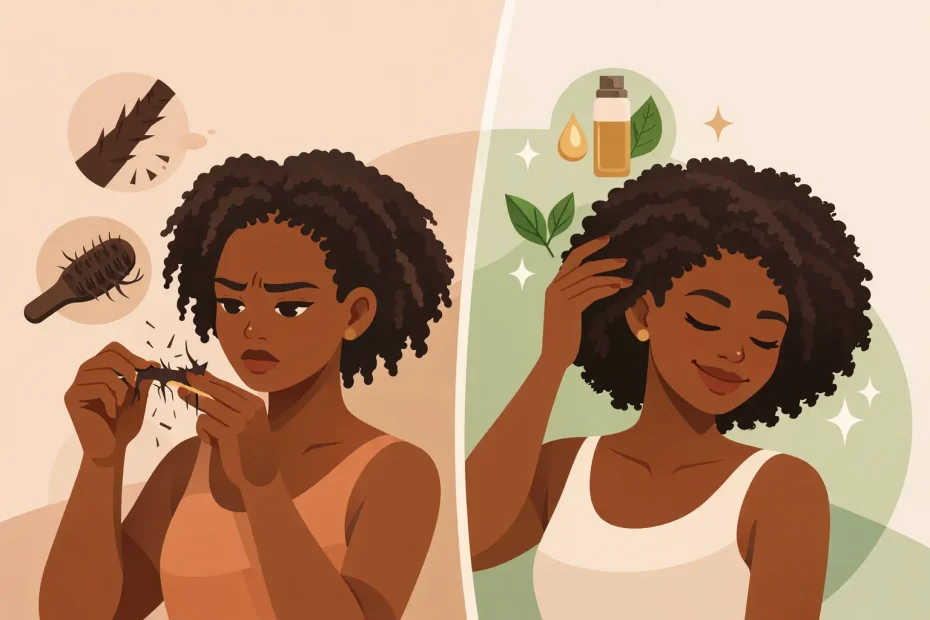
Breakage usually shows up before length retention does. You wash, detangle, moisturize, and still find short snapped pieces on your shirt, sink, or comb. If you have textured hair, especially type 4 hair, learning how to stop breakage naturally is less about chasing one miracle product and more about building a routine that keeps your strands flexible, protected, and supported over time.
The good news is that breakage is often highly responsive to small changes. The harder truth is that natural care is not the same as random DIY. Hair can break from dryness, protein overload, weak points from rough handling, poor scalp health, tension, or even habits that seem harmless. When I talk about natural haircare, I mean using ingredients and practices that work with the biology of textured hair, not against it.
What breakage is really telling you
Breakage is not the same as shedding. Shedding comes from the root and usually includes a tiny white bulb at the end. Breakage happens along the strand, which means the hair shaft has become weak somewhere between root and tip. For many of us, the most fragile areas are the ends, the line of demarcation after a style change, or high-manipulation zones like the edges and nape.
Hair usually breaks when it loses elasticity. A healthy strand has some stretch to it. Dry, damaged, or overworked hair does not. It snaps instead of bending. That is why breakage often comes from a mix of moisture loss and physical stress rather than one single issue.
If your hair feels rough, tangles easily, looks dull, or breaks more after wash day, your routine may be disrupting the cuticle faster than it is helping it. That can happen with frequent heat, harsh shampoos, aggressive finger detangling, tight protective styles, or layering too many hardening products without enough moisture.
How to stop breakage naturally at the root of the problem
To stop breakage naturally, I focus on five things at once: cleansing without stripping, deep moisture, sealing and protection, low-tension styling, and consistency. None of these are glamorous, but they are what move the needle.
Start with your wash routine. Dirty hair is not automatically stronger hair. Product buildup, sweat, and flakes can make the scalp inflamed and the hair harder to hydrate. But over-cleansing can leave textured hair brittle. For most people with coily or kinky hair, a gentle wash routine every 7 to 14 days gives a better balance than either daily washing or stretching wash day too long.
Choose cleansers that remove buildup without leaving the hair squeaky. That tight, stripped feeling after shampoo is not a sign of success. It often means the hair is now more vulnerable to tangling and moisture loss. If your scalp tends to itch or flake, this matters even more because scratching and irritation can lead to further breakage around the root area.
Moisture has to be built into the strand
A lot of people say their hair is moisturized because they applied a cream. That is not always true. Moisture begins with water, then gets supported by ingredients that help the strand hold onto it. If your hair is constantly dry, look at your process, not just your products.
Apply your leave-in or hydrating treatment when the hair is damp, not bone dry. Then follow with a butter or oil if your hair needs help sealing in that moisture. This is where rich botanicals can make a real difference, especially for tightly coiled hair that loses moisture quickly. Batana oil, nourishing butters, and herbal powders used correctly can support softness and reduce the brittle feel that often leads to snapping.
Still, more product is not always better. Heavy layering can create buildup that makes it harder for water to enter the hair later. If your strands feel coated but still dry, simplify. One hydrating product and one sealing product is often enough.
Protein can help, but too much can make things worse
Natural hair needs strength and softness. If your hair feels mushy, limp, and overly stretchy, a strengthening treatment may help. But if it already feels hard, stiff, and straw-like, adding more protein can push it toward breakage.
This is where paying attention matters more than following a trend. Some DIY masks and strengthening treatments sound natural but behave like hardening agents on the hair. If you are using rice water often, layering protein-rich stylers, or doing frequent strengthening masks, your hair may need a pause and a deep moisturizing reset.
Handle your hair like it is growing
One of the fastest ways to reduce breakage is to reduce unnecessary friction. That means changing what happens during detangling, styling, sleeping, and even getting dressed.
Detangle in sections on damp hair with slip. That slip can come from conditioner, a botanical mask, or a leave-in with enough glide. Start at the ends and work upward slowly. If you hear ripping, the method needs adjusting. A wide-tooth comb works for some people, while others do better finger detangling first and then following with a tool. It depends on your density, your shed hair levels, and how easily your strands knot.
Protective styling only works when the style itself is protective. If your braids are too tight, your buns pull at your edges, or your wigs leave your hair dry underneath, the style is preserving convenience, not hair health. Low-tension twists, flat twists, loose braids, and well-moisturized tucked styles are usually better choices when breakage is the concern.
At night, cotton pillowcases can pull moisture and create friction. A satin or silk scarf, bonnet, or pillowcase can help the hair glide instead of snag. It seems small, but those repeated hours of rubbing add up.
Scalp health matters more than many routines admit
When people ask how to stop breakage naturally, they often focus only on the strand. But weak growth from an unhealthy scalp can leave the hair more vulnerable from the beginning.
A scalp that is inflamed, flaky, clogged, or overly dry can affect the environment where hair grows. Gentle cleansing, scalp massage, and supportive botanical care can improve comfort and help maintain healthier growth over time. Herbal traditions across Africa have long treated haircare as more than surface styling. Powders and oils were part of a broader practice of cleansing, conditioning, and protecting both scalp and strand.
This does not mean pouring every oil onto your scalp. If you are prone to buildup or itchiness, heavy oiling can backfire. A lighter, intentional scalp routine is often better than constant coating. Massage helps because it stimulates circulation and encourages you to pay attention to tenderness, flakes, or irritation before they become bigger issues.
The natural ingredients that make sense for breakage
Not every natural ingredient is useful for breakage, and not every popular ingredient suits every head of hair. I prefer ingredients with a long track record in textured haircare and a clear purpose.
Batana oil is valued for helping support softness and manageability, especially when hair feels dry and weak. Chebe powder is traditionally used as part of length retention practices, though it works best when used with moisture and not as a dry standalone treatment. Ambunu powder can help cleanse gently while adding slip, which makes wash day less damaging for fragile strands. Rich butters are useful for sealing, especially on ends that split easily.
The key is method. Even the best botanical ingredient can disappoint if the hair is dirty, the style is too tight, or the ends are overdue for care.
When trimming is the natural choice
Sometimes the most natural thing you can do is trim damaged ends. Split ends do not repair themselves permanently. They continue traveling upward, creating more weak points along the strand. If your ends constantly tangle, look thin, or feel rough no matter what you apply, a trim may be the reset your routine needs.
That does not mean cutting off all your progress. A light dusting can make the rest of your care more effective because moisture and sealants perform better on healthier ends.
How to stop breakage naturally and keep the results
The biggest shift comes when you stop treating breakage as an emergency and start treating it as a pattern. Your hair responds to repetition. If you moisturize deeply but detangle roughly, or wear a nourishing mask but keep choosing tight styles, the progress will stall.
I have found that textured hair thrives when the routine is simple enough to repeat. Clean scalp, hydrated strands, sealed ends, gentle handling, and culturally rooted ingredients used with intention can do more than a shelf full of random products. That is part of why Jostylin centers botanical care that respects both tradition and real-life use.
Give your hair a few wash cycles before judging results. Natural repair is often gradual. Less breakage in your comb, softer ends, fewer single-strand knots, and hair that stays moisturized longer are the signs to watch for.
If your routine starts making your hair feel easier instead of harder, you are usually on the right path. And when your hair feels supported, length retention stops looking mysterious and starts feeling earned.