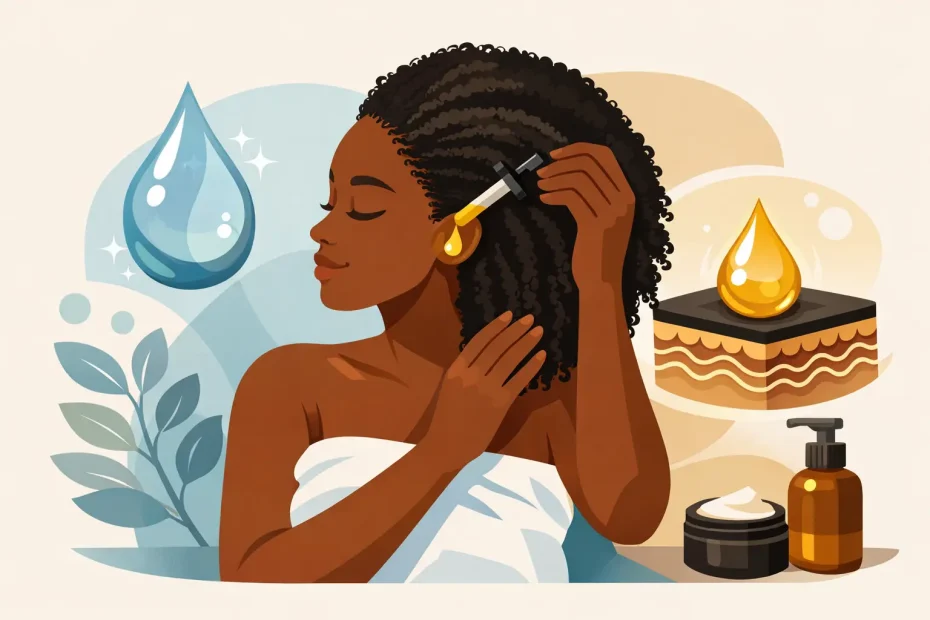
Washday can leave your hair feeling perfect for about six hours, then suddenly dry by the next morning. If that sounds familiar, the issue usually is not that your hair did not get moisture. It is that the moisture was never properly sealed in. Knowing how to seal moisture after washday can make the difference between soft, pliable hair and strands that feel rough before the week is even halfway done.
For textured hair, especially type 4 hair, moisture retention is a practice, not a one-product miracle. Water is still the real source of moisture, but what you do after cleansing and conditioning determines how long your hair holds onto it. That is where layering, product texture, porosity, and technique all start to matter.
How to seal moisture after washday without guesswork
The simplest way to think about sealing is this: first bring water into the hair, then slow down how quickly that water escapes. A leave-in conditioner helps keep the hair hydrated and manageable, while oils, butters, or creams create a light barrier that helps reduce moisture loss. The right order matters, but so does choosing products your hair will actually tolerate.
If your hair feels dry even after you use a leave-in and oil, the problem may be one of two things. Either your hair did not get enough water before styling, or your sealant is too heavy, sitting on top of the strand instead of helping it stay supple. Sealing should not leave your hair greasy, stiff, or coated. Done well, it leaves your hair soft, moisturized, and able to bend without snapping.
Start with soaking wet or very damp hair
One of the biggest mistakes I see is trying to seal moisture onto hair that is already half dry. If your hair has started drying while you section, apply a little water back in before your leave-in. Dry hair plus oil is not moisture. It is dry hair with shine.
After rinsing out your conditioner, work in sections and keep unused sections clipped away. This helps you apply products while the hair is still hydrated. For dense natural hair, sectioning is not extra work. It is usually the only reason product gets distributed evenly.
Use a leave-in that adds slip and softness
A good leave-in gives your hair hydration and flexibility. It should help with detangling, reduce friction, and make the strand feel smoother without turning gummy. If your leave-in disappears instantly and your hair still feels hard, you may need something richer. If it sits on top and looks white or filmy, it may be too heavy or not compatible with the next product in your routine.
For many naturals, water-based leave-ins with humectants and fatty alcohols do the best job here. If you use herbal powders or clay-based cleansers in your routine, your leave-in step matters even more because it restores softness after cleansing.
The best order for sealing moisture after washday
You have probably heard of LCO and LOC. Both methods can work, but neither is universal. The real goal is to trap hydration in a way that fits your strand thickness, porosity, and climate.
LCO means leave-in, cream, then oil. This often works well for thicker, high-porosity hair that likes richer layering. The cream adds body and softness, and the oil helps seal that in.
LOC means leave-in, oil, then cream. Some people prefer this because the oil goes on while the hair is still very damp, then the cream adds another layer of softness and hold. This can work well if your cream is lightweight and your oil is not too thick.
If your hair gets weighed down easily, you may not need both oil and cream. Sometimes leave-in plus a butter-based styler is enough. Sometimes a leave-in and a light oil are all your hair wants. This is why moisture routines get better when you stop copying what worked for someone else and start paying attention to how your own hair responds.
Choose your sealant based on porosity
Low-porosity hair usually struggles with buildup faster than dryness from lack of product. Hair like this often prefers light sealants such as grapeseed oil, jojoba oil, or a small amount of a light cream. Heavy butters can sit on the strand and make the hair feel coated rather than moisturized.
High-porosity hair tends to lose moisture more quickly because the cuticle is more lifted. This hair often benefits from richer creams, whipped butters, or heavier oils layered sparingly over a leave-in. Ingredients like shea butter, batana oil, and rich botanical blends can help support longer-lasting softness when used in the right amount.
Medium-porosity hair has more flexibility, but even then, technique still matters more than product hype. You do not need the heaviest product on the shelf. You need enough sealant to slow moisture loss without suffocating the hair.
Oils and butters are not interchangeable
This is where a lot of washday routines go sideways. Oils and butters can both help seal, but they behave differently. Oils tend to spread more easily and can help reduce friction and add shine. Butters are more occlusive and better for creating a longer-lasting barrier, especially in dry weather or on ends that lose moisture quickly.
If your hair feels dry every two days, your ends may need a butter while the rest of your hair only needs a lighter oil or cream. You do not have to use the same product from roots to ends. In fact, many naturals get better results when they customize by section.
Common mistakes that stop moisture from lasting
Sometimes the problem is not your products. It is the way they are layered or the condition of the hair underneath.
Applying too much product is a common one. When hair is overloaded, products pile up on the cuticle and block moisture instead of preserving it. The hair may feel sticky, dull, or dry even though you used a lot.
Skipping deep conditioning also shows up later in the week. If your hair starts washday already depleted, sealing can only do so much. Sealing helps maintain moisture. It does not replace it.
Another issue is using oils as moisturizer. Oil is a sealant, not hydration by itself. If there is not enough water in the hair first, the oil has nothing meaningful to lock in.
Heat damage, excessive clarifying, and broken ends can also make moisture retention harder. Sometimes dryness is not just a routine issue. It is a sign the hair needs trimming, less manipulation, or a better balance between cleansing and conditioning.
How to make your moisture last all week
Once your hair is sealed, the next goal is keeping it that way. Protective styling helps because it reduces how often your strands rub against clothing, hands, and dry air. Twists, braids, buns, and stretched styles often hold moisture longer than loose hair.
Night care matters too. Sleeping with your hair uncovered can pull moisture right back out through friction. A satin or silk bonnet, scarf, or pillowcase helps preserve softness and reduces tangling.
Try not to reapply heavy products every day. If your hair feels a little dry midweek, a light mist of water or a water-based refresher followed by a tiny amount of sealant is usually better than stacking more cream on top of old product. Heavy reapplication often leads to buildup, and buildup makes future moisture harder to absorb.
If you live in a very dry climate, your sealing routine may need to be richer than someone living in humidity. In humid weather, too much glycerin or too many layers can cause frizz or swelling. This is one of those areas where it really depends. The weather outside absolutely changes what your hair needs.
A simple washday moisture routine that works
If you want a practical starting point for how to seal moisture after washday, keep it simple. Cleanse the scalp and hair without stripping. Follow with a conditioner or deep conditioner that gives slip and softness. Apply your leave-in on damp hair in sections. Then seal with either a cream, an oil, a butter, or a combination that suits your porosity and density. Finish by styling in a way that helps the hair stay stretched and protected.
For naturals who love botanically rooted routines, this is also where traditional ingredients can fit beautifully. A nourishing butter blend, a lightweight botanical oil, or a richer sealant for the ends can support moisture retention when used with intention. That balance between water, plant-based nourishment, and protective styling is where real consistency happens.
Healthy natural hair does not always need more products. Often, it needs better layering, better timing, and a routine that respects how textured hair actually behaves. When you learn what your hair holds onto and what it rejects, sealing moisture becomes much less confusing.
Give your hair enough water, seal with purpose, and let softness become the standard, not the exception after washday.