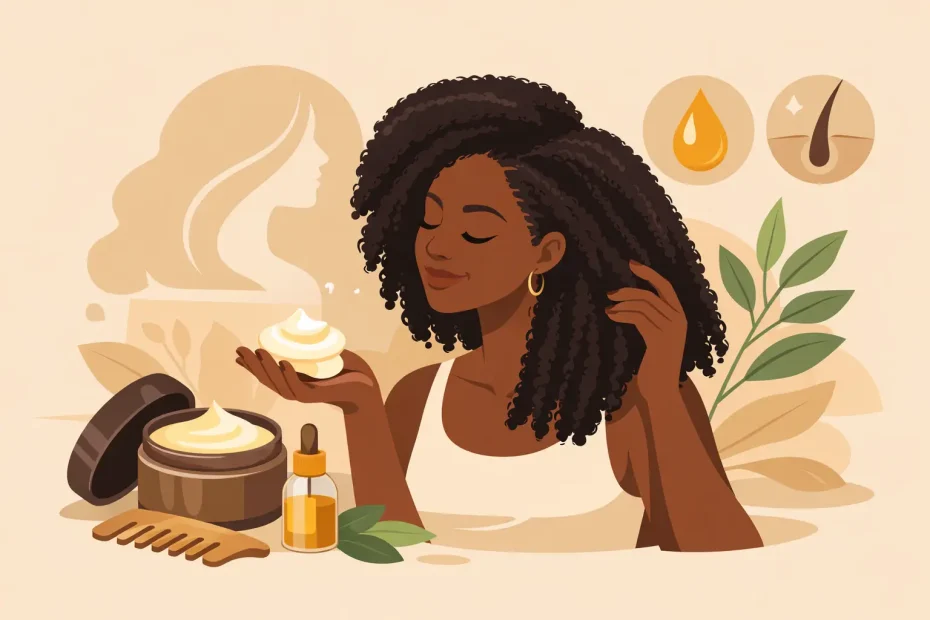
If your hair looks like it is growing but never seems to stay longer, your ends are usually telling the real story. This guide to length retention butter is for anyone with natural hair who is tired of watching progress disappear through dryness, breakage, and rough handling. I want to make this simple: length retention is not only about growth. It is about keeping the hair you already grew.
For textured hair, especially type 4 hair, that difference matters. Our strands can be beautifully full and still be vulnerable at the oldest part of the hair shaft. A good length retention butter helps by slowing moisture loss, softening dry ends, and adding a protective layer that supports low-manipulation styling. It is not magic, and it cannot fix every cause of breakage, but used well, it can make a visible difference over time.
What a guide to length retention butter should actually explain
A lot of people hear the word butter and think of heavy grease or a random styling cream in a jar. That is not quite the point. A length retention butter is usually a rich, concentrated blend of butters and oils designed to help the hair hold onto moisture longer while reducing friction and brittleness. Think shea butter, mango butter, batana oil, and other plant-based emollients that coat the strands without turning your routine into buildup city.
The key phrase here is length retention, not length creation. Hair grows from the scalp, but retention happens along the strand. If your ends are splitting, snapping, or constantly dry, your hair may be growing normally while your retained length stays the same. Butter becomes useful because it supports the part of the process many people miss – preservation.
How length retention butter helps natural hair
When I talk about butter for retention, I am really talking about function. It helps create a barrier that keeps hydration in for longer. That matters because textured hair often loses moisture faster, especially when exposed to dry air, heat styling, frequent washing, or friction from cotton pillowcases and clothing.
A good butter also improves slip and softness on older hair. Older ends tend to be more porous and more fragile. When they stay dry, they catch on each other, knot more easily, and break during detangling. Butter can reduce that rough feeling so your comb, fingers, or brush are not fighting against your hair every wash day.
There is also the protective styling side of it. Twists, braids, buns, and tucked styles generally work better when the hair is moisturized and lightly sealed. Butter can help keep those styles from becoming dry little cages that leave your ends worse off than before.
What to look for in a length retention butter
Not every thick product deserves space in your routine. A useful butter should support moisture retention without leaving your strands stiff, waxy, or impossible to cleanse.
I usually look first at the ingredient balance. Plant butters such as shea and mango give body and sealing power. Botanical oils such as batana oil, castor oil, or avocado oil can add softness and pliability. If the formula includes herbs or powders rooted in traditional hair practices, that can be a plus, but the product still needs to perform well in everyday use.
Texture matters too. Some butters are dense and best for coarse, high-density hair or winter routines. Others are whipped and lighter, which may work better for finer strands or anyone prone to buildup. There is no prize for using the heaviest product if your hair responds better to something softer and easier to spread.
Scent and sensitivity matter more than people admit. If a product is heavily fragranced and your scalp is reactive, keep it off the scalp and focus on the hair shaft and ends. For many people, butter works best as a strand product, not a scalp treatment.
How to use length retention butter without overdoing it
The biggest mistake I see is applying butter to bone-dry hair and expecting moisture. Butter seals. It does not replace water. If your hair is already dry, piling on butter may make it feel coated while the strand underneath remains thirsty.
Start with damp or properly moisturized hair. That could mean after your leave-in conditioner, after a water-based cream, or after lightly misting a section during styling. Then use a small amount of butter, especially on the mid-lengths and ends. Smooth it through with your fingers and focus on the oldest parts of your hair.
This works especially well in a simple layering routine. Water or a water-based leave-in comes first. Then the butter helps lock that softness in. If your hair loves oils, a very small amount can be added depending on the formula you are using, but many butters already contain enough oils on their own.
The amount you need depends on density, porosity, climate, and style. In a dry winter climate, you may need more frequent sealing. In humid weather, less may be enough. If your twists feel sticky, your hair takes forever to dry, or you notice dull residue, that is usually a sign to scale back.
Best times to use a guide to length retention butter in your routine
Wash day is the obvious time, but it is not the only one. Butter can also be useful midweek when your ends begin to feel rough. A tiny amount warmed between your palms can refresh twists, braid-outs, and stretched styles without restarting your whole routine.
It is also helpful before protective styling. If you are putting your hair away for several days or weeks, the ends need extra support. Applying butter to the ends before braiding, twisting, or tucking can reduce the dry, crispy feeling that often shows up by the time you take the style down.
Night care is another underrated moment. If your ends are exposed in a puff, bun, or loose style, a small touch of butter before covering your hair with satin or silk can help reduce overnight friction. It is a small habit, but small habits are usually what make retention visible.
Common mistakes that can cancel out the benefits
One product cannot carry a damaging routine. If your hair is constantly manipulated, ripped through during detangling, or neglected between wash days, even the best butter will struggle to help.
Using too much heat is one issue. Repeated heat styling can weaken the strand and make the ends more likely to split. Butter may soften the hair, but it cannot reverse heat damage.
Skipping trims is another area where nuance matters. You do not need to trim on a rigid schedule if your ends are healthy, but hanging onto shredded ends in the name of retention often backfires. Damaged ends tangle more and break higher up the strand.
Buildup is the other side of the conversation. If you layer butter heavily week after week and never cleanse thoroughly, your hair may start rejecting moisture. The strands feel coated, but not hydrated. That is when a clarifying wash and a lighter hand can help.
Who benefits most from length retention butter
This kind of product tends to be especially helpful for dry, textured hair that needs more support on the ends. If you wear protective styles, keep your hair stretched often, or live in a dry climate, butter can become a steady part of your maintenance routine.
If your hair is fine, low-density, or easily weighed down, you may still benefit, but your version of success will probably look different. A lighter butter used sparingly may work better than a dense formula. It really does depend on your strand size and how your hair responds to oils and butters.
For many women in the natural hair community, especially those building routines around botanical care, a well-made butter fits into a slower and more intentional approach. It supports consistency. It encourages handling the hair with care. And that, more than hype, is what length retention usually asks from us.
If you are building a culturally rooted routine, Jostylin’s approach to botanical haircare makes room for this kind of product in a practical way. The goal is not to collect jars. The goal is to use the right support at the right time so your hair can keep what it grows.
A simple routine that makes butter worth using
If you want results, keep the routine clear. Cleanse your hair and scalp regularly. Moisturize with water-based products. Apply butter mainly to the lengths and ends. Keep manipulation low. Protect your hair at night. Pay attention to how your ends feel instead of guessing.
That is where length retention becomes less frustrating. You stop chasing growth tricks and start protecting the hair that has already worked hard to get here. Sometimes the real shift is not a dramatic new method. It is finally giving your ends the steady care they have been asking for.