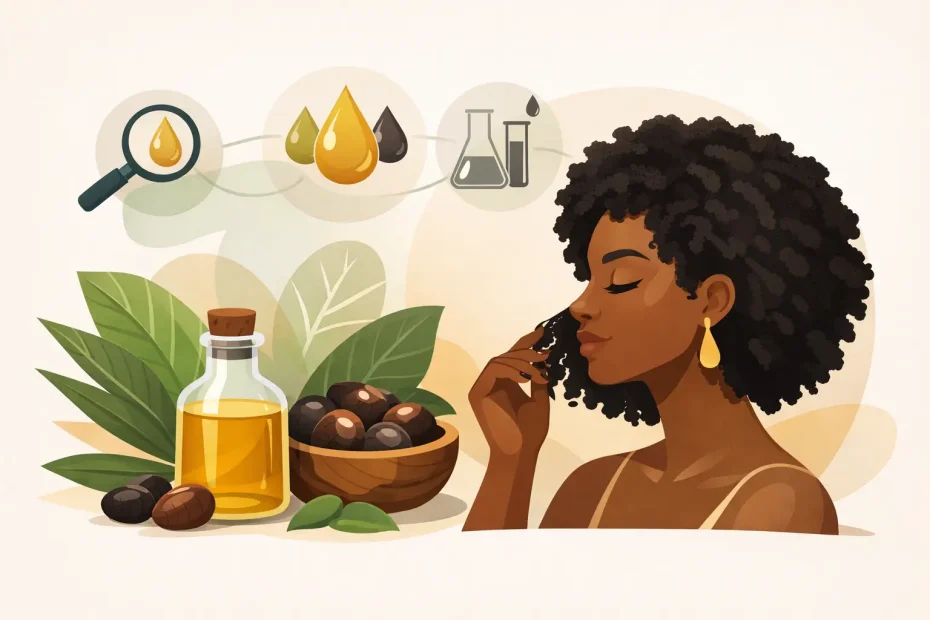
If you have ever opened a jar of batana oil and wondered whether it was supposed to smell that strong, feel that thick, or look that dark, you are asking the right question. A real guide to batana oil quality starts with this truth: batana oil is not a polished, one-look-fits-all ingredient. It is a traditional botanical, and quality shows up in how it is sourced, processed, stored, and sold.
For many of us with textured hair, especially dry, high-porosity, or protective-style hair, batana oil gets attention because it helps soften strands, support moisture retention, and give brittle ends a richer seal. But not every jar on the market offers the same experience. Some products are pure and carefully handled. Others are diluted, overly refined, or marketed in ways that make it hard to know what you are really buying.
What a guide to batana oil quality should actually cover
A useful guide to batana oil quality should go beyond hype. It should help you evaluate the oil with your senses, read the label with more confidence, and understand why one batch may not look exactly like another.
Batana oil is traditionally associated with Indigenous communities in Central America, particularly Honduras. That matters because quality is tied to origin and processing traditions, not just branding. When companies strip away sourcing details and only sell a fantasy of “miracle hair growth,” that is usually a sign to slow down and look closer.
High-quality batana oil tends to have a rich, earthy, roasted scent, a deep brown to amber-brown color, and a dense texture that softens when warmed between your palms. It does not usually behave like a lightweight cosmetic serum. If it pours like a thin, clear oil, that does not automatically mean it is fake, but it often means it has been blended with other oils or heavily processed.
Color, scent, and texture tell you a lot
The first quality check is visual and sensory. Batana oil is not known for being pale, odorless, or ultra-silky in the bottle. In its less refined form, it is typically darker and more aromatic because it retains more of its natural character.
Color can vary from medium brown to dark caramel depending on processing and batch variation. That variation is normal. What deserves caution is a product marketed as pure batana oil that looks almost transparent or bright yellow. In many cases, that points to dilution or confusion with another oil.
Scent matters too. A strong nutty, smoky, or roasted smell is common. Some people love it, and some do not. But a completely fragrance-free product labeled as unrefined batana oil raises questions unless the seller clearly explains its processing. On the other hand, a heavily perfumed jar can hide poor raw material quality or oxidation.
Texture is another clue. Good batana oil often feels dense, buttery, or balm-like depending on room temperature. In cooler spaces, it may firm up. In warmer conditions, it softens. That does not mean the oil is damaged. It means you are dealing with a natural botanical fat-rich oil, not a lab-engineered finish.
Purity is not just about the front label
One of the biggest problems in this category is front-label marketing. Many products say “100% natural” or “pure batana” while the ingredient list tells another story. If you want quality, turn the jar or bottle around and read carefully.
The cleanest version will list batana oil alone, or use the correct botanical naming with no filler oils added. If you see soybean oil, mineral oil, sunflower oil, fragrance, silicones, or preservatives in a product promoted as pure batana oil, then it is a blend. A blend is not always bad, but it should be sold honestly. If you are paying premium pricing, you deserve transparency.
This is also where packaging can help or hurt quality. Batana oil does better in sealed containers that protect it from too much light and heat. A clear jar left in warm conditions for long periods can speed up quality loss. If the oil smells sour, sharply rancid, or unusually stale, storage may be the issue.
Why sourcing matters so much
With traditional botanicals, quality is deeply connected to sourcing. Where the oil comes from, how it is extracted, and whether the seller can explain its origin all shape what ends up in your hands.
A trustworthy seller should be able to tell you whether the oil is raw or refined, where it was sourced, and whether it has been blended. You do not need a long romantic story. You need clear, usable information. Vague wording like “inspired by ancient beauty secrets” tells you very little. Specific sourcing details tell you much more.
Ethical sourcing matters here too. Batana oil has cultural roots, and quality conversations should not erase that. When a brand respects the ingredient, it usually shows in the way it talks about origin, handling, and intended use. That kind of respect often goes hand in hand with better product integrity.
Raw vs refined batana oil
This is where expectations need to be realistic. Raw batana oil usually has the strongest scent, darkest tone, and fullest natural profile. Many people looking for traditional hair sealing and scalp care prefer this version because it feels closer to the ingredient’s original state.
Refined batana oil may smell lighter and feel more cosmetically elegant, which some users prefer. But refining can reduce some of the sensory markers people associate with authenticity. That does not make it useless. It just means the product experience is different.
If you are using batana oil for rich sealing on dry strands, edges, or ends, raw oil may be the better fit. If you want something easier to blend into a lighter routine, a refined or blended version may work better. Quality is not only about rawness. It is also about honest labeling and alignment with your needs.
How to spot red flags before you buy
Some signs are easy to miss if you are shopping quickly. Extremely low pricing is one of them. Batana oil is a specialty botanical, and true quality usually comes at a higher cost than common carrier oils. If the price seems far below the rest of the market, there is a reason.
Another red flag is exaggerated claims. Batana oil can support softness, manageability, and moisture retention, but no oil can guarantee overnight growth or reverse every form of hair loss. Brands that overpromise often underdeliver on ingredient quality.
Watch for missing ingredient lists, no mention of origin, and product photos that look suspiciously generic. If every review sounds identical or focuses only on shipping speed rather than product performance, that is not very helpful either.
How I would evaluate batana oil quality at home
When I want to judge whether a batana oil is worth keeping in my routine, I start simple. I check the ingredient label, smell the product, warm a small amount between my fingers, and notice how it behaves on clean skin or a section of dry hair.
A quality oil should soften with body heat and spread without feeling watery. On hair, it should add weight and richness without needing a large amount. On the scalp, it should feel nourishing, not heavily coated with synthetic fragrance. If the oil sits oddly on the hair, smells artificial, or feels more like a generic blend than a traditional botanical, I take that seriously.
Patch testing still matters, especially if you are sensitive to richer oils or roasted natural scents. Natural does not automatically mean irritation-free. Quality and compatibility are related, but they are not the same thing.
The best quality batana oil for your routine depends on your hair
This is the part many articles skip. The best batana oil is not always the darkest or the most expensive. It depends on how you plan to use it.
If your hair is very dry, tightly coiled, or usually kept in twists, braids, wigs, or low-manipulation styles, a thicker, less refined batana oil may serve you better. It can help seal in moisture after a water-based leave-in and protect fragile ends.
If your scalp gets congested easily or your strands are fine, you may prefer using a smaller amount or choosing a thoughtful blend. Heavier is not always better. The goal is support, not suffocation.
That is why education matters so much in botanical haircare. We do not all need the exact same formula. We need honest products and enough knowledge to choose well.
Brands like Jostylin have helped more people approach ingredients this way – not as trends, but as tools within a grounded, consistent routine. That mindset leads to better results than hype ever will.
A good batana oil should feel like something with character, not something flattened into a marketing promise. When you know what quality looks like, you stop buying from panic or impulse and start choosing from experience.