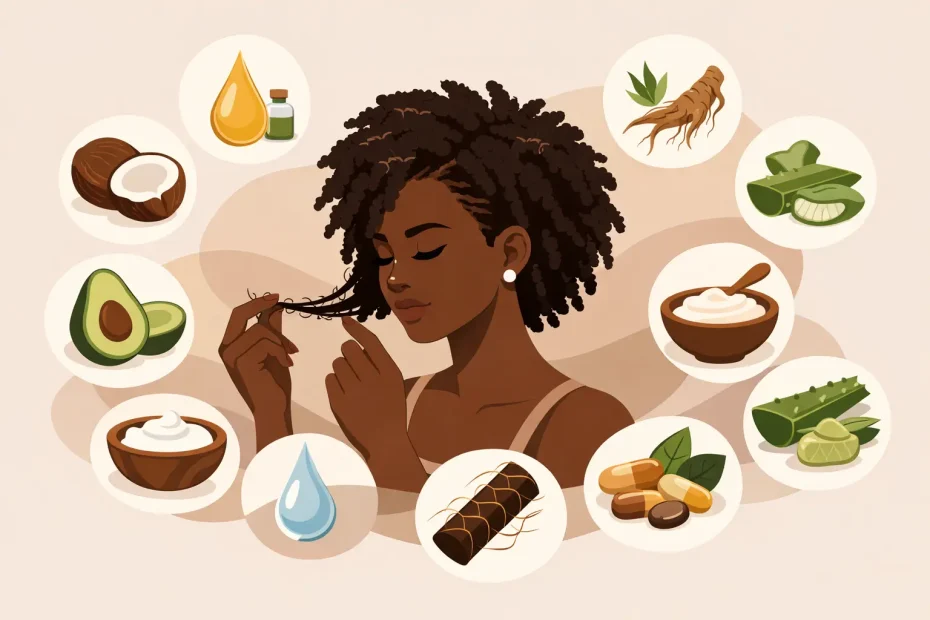
When your hair snaps while detangling, feels rough no matter how much product you use, or looks dull a day after wash day, the issue is usually bigger than “dry hair.” Finding the best ingredients for brittle hair starts with understanding what brittle hair is actually asking for – more water retention, better lubrication, and less stress during styling.
Brittle hair is common in textured hair, especially when strands are naturally fine, high porosity, color-treated, heat-exposed, or handled too often. For many of us with curls, coils, and kinks, the goal is not just softness for one day. We want ingredients that help our hair stay flexible, resist breakage, and hold up through wash day, protective styling, and everyday life.
What brittle hair really needs
Brittle hair is hair that has lost elasticity. It can bend only so far before it breaks. Sometimes that comes from protein loss, but just as often it comes from chronic dryness, friction, harsh cleansing, buildup, or damage from heat and chemical processing.
That is why the best routine is rarely about one miracle ingredient. Brittle hair usually responds best to a combination of humectants, emollients, strengthening ingredients, and gentle botanicals that reduce manipulation. If your hair feels hard and stiff, too much protein may make things worse. If it feels mushy, weak, and over-moisturized, it may need more structure. The right ingredient depends on the state of your hair, not just your curl pattern.
10 best ingredients for brittle hair
1. Aloe vera
Aloe vera works well for brittle hair because it brings lightweight hydration without coating the hair too heavily. It helps draw moisture into the strand and can make detangling easier, which matters when fragile hair breaks under tension.
I like aloe in leave-ins, spritzes, and masks for hair that feels dry but still needs bounce. If your hair is very high porosity, aloe alone may not be enough, so it usually performs better when paired with a richer butter or oil to help seal that moisture in.
2. Honey
Honey is one of the most useful humectants for dry, brittle strands. It helps attract moisture and can improve softness, especially when hair feels rough or straw-like after shampooing.
The trade-off is that honey works best in balanced formulas. In very dry climates, strong humectants can sometimes leave hair feeling exposed unless they are combined with emollients. That is why honey tends to shine in deep conditioners rather than as a standalone treatment.
3. Batana oil
Batana oil is especially helpful when brittle hair also looks dull, stressed, or overworked. This rich oil supports softness and helps reduce the dry, crispy feel that makes ends more likely to snap. For textured hair, heavier oils like batana can be useful because they add slip and cushion during styling.
It is not the best fit for everyone in large amounts. If your hair gets weighed down easily, use a small amount on the ends or apply it over a water-based leave-in instead of using it alone. For thicker, coarser, or very dry hair, it can be an excellent sealing ingredient.
4. Chebe powder
Chebe powder has deep roots in traditional hair practices and is often used to support length retention. That matters because brittle hair does not just need growth support at the scalp – it needs help keeping the length it already has.
Chebe is most useful when your hair breaks from dryness and friction rather than from scalp issues. It is usually blended into creams, butters, or masks instead of being used on its own. The key is application. Chebe can be very effective for reducing breakage in protective routines, but it should be used gently and rinsed thoroughly if your scalp is sensitive.
5. Ambunu powder
Ambunu powder is a strong choice for brittle hair when wash day itself is part of the problem. Some shampoos strip textured hair to the point that strands feel tight and fragile before conditioning even begins. Ambunu offers a gentler cleansing experience and creates slip that can make detangling less damaging.
That reduced friction is a real benefit for brittle hair. If your breakage spikes during washing, switching to a gentler cleansing botanical can make a noticeable difference. Ambunu is especially useful for those of us who want clean hair without the squeaky, stripped feeling.
6. Marshmallow root
Marshmallow root is not always the first ingredient people think about, but it deserves more attention. It is rich in mucilage, which gives hair slip and helps strands glide past each other with less snagging.
For brittle hair, that matters every single wash day. Detangling on dry, resistant hair creates unnecessary breakage, especially at the ends. Marshmallow root works well in conditioners, detanglers, and herbal rinses for anyone whose hair tangles easily or feels fragile when manipulated.
7. Shea butter
Shea butter remains one of the best ingredients for brittle hair because it helps protect the strand from moisture loss and everyday wear. For natural hair, especially type 4 textures, brittleness often shows up first in the oldest part of the hair – the ends. Shea helps give those ends a little more defense.
Still, the way you use shea matters. Raw or very heavy shea can sit on low-porosity hair if applied too thickly. In whipped butters or balanced creams, though, it can be excellent for sealing in moisture, softening dry sections, and supporting protective styles.
8. Hydrolyzed protein
Not all brittle hair needs protein, but some absolutely does. If your hair is color-treated, heat-damaged, chemically processed, or breaking despite regular moisturizing, hydrolyzed proteins can help reinforce weak areas in the cuticle.
The important part is moderation. Protein is helpful when hair feels limp, overly stretchy, and weak. If your hair already feels hard, dry, and inflexible, too much protein can push it further in the wrong direction. Look for balanced products with hydrolyzed wheat, rice, silk, or keratin proteins rather than reaching for the strongest treatment every week.
9. Glycerin
Glycerin is another classic humectant that can benefit brittle hair, especially in leave-ins and moisturizers designed to improve softness. It helps hair hold onto water, which can increase flexibility and reduce that crackly, dehydrated feeling.
Like honey, glycerin is not one-size-fits-all. In humid weather it can work beautifully. In very dry air, some people find it less reliable unless it is supported by oils or butters. If you live in a climate with major seasonal shifts, you may notice your hair responds differently to glycerin throughout the year.
10. Avocado oil
Avocado oil is a strong middle-ground ingredient for brittle hair. It is richer than lightweight oils but usually not as heavy as some dense butters. It helps improve softness, adds shine, and supports hair that feels rough or depleted.
I often see avocado oil work well in hot oil treatments, deep conditioners, and sealing blends. For brittle hair that needs nourishment but not a thick coating, it can be a smart option. It is especially useful when your hair needs more flexibility and less stiffness.
How to choose the best ingredients for brittle hair
The best ingredients for brittle hair depend on what brittleness looks like on your head. If your hair breaks mostly during detangling, focus on slip-rich ingredients like marshmallow root, ambunu, and aloe vera. If your ends stay dry no matter what, richer sealants like shea butter, batana oil, or avocado oil may help more.
If your hair is damaged from bleach, relaxers, or frequent heat, balanced protein may be part of the answer. If your hair is natural but chronically dry, you may get better results from layering moisture and emollients instead of jumping straight to protein. Brittle hair is not always asking to be hardened. Often it is asking to be handled less and cushioned more.
What ingredients can make brittle hair worse
A few common ingredients and habits can work against fragile hair. Strong sulfates, high-alcohol styling products, and overly harsh clarifiers can leave the hair drier than it started. Heavy product buildup can also be a problem because it blocks moisture from getting in, even when you are using good products.
This is where routine matters as much as ingredients. A wonderful butter cannot fix daily heat damage. A strengthening mask will not help much if you detangle roughly or wear tight styles that stress the hairline and ends. Ingredients support the routine, but they do not replace it.
A simple way to build a brittle-hair routine
Start with a gentle cleanser or cleansing botanical that does not strip the hair. Follow with a conditioner or deep treatment that combines moisture and slip. After that, apply a water-based leave-in, then seal with an oil or butter that suits your hair density and porosity.
If your hair is very fragile, keep styling simple for a few weeks. Low-manipulation styles, regular trims, satin protection at night, and less tension can help those good ingredients actually do their job. At Jostylin, we believe ingredients rooted in traditional botanical care work best when they are used consistently, not chased as one-time fixes.
Brittle hair usually improves when you stop forcing it to perform and start giving it what it has been missing all along – moisture, softness, support, and a gentler routine.