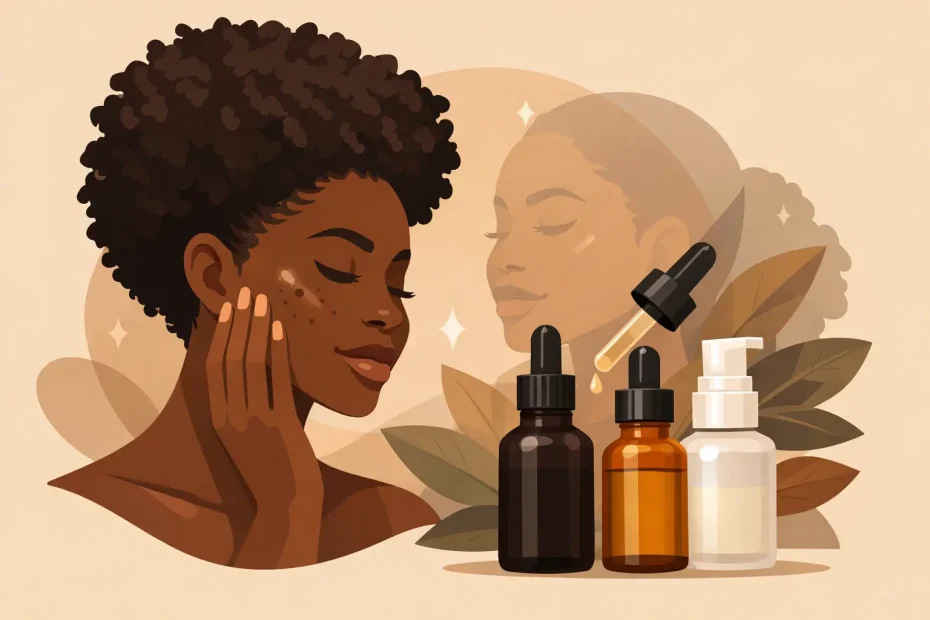
A dark spot that lingers for months can make a good skincare routine feel like it is not working at all. When I talk about dark spot serums for black skin, I am talking about formulas that respect melanin-rich skin – not products that chase brightness at the expense of barrier health, and not shortcuts that leave you with irritation, rebound pigmentation, or both.
For Black skin, treating hyperpigmentation is rarely just about fading a mark. It is also about preventing new discoloration, calming inflammation, and choosing ingredients that do not trigger the very problem you are trying to fix. That is why the right serum matters so much.
What makes dark spot serums for black skin different?
Melanin-rich skin is beautiful, resilient, and still highly reactive when it comes to inflammation. A small breakout, bug bite, scratch, or aggressive facial can leave behind post-inflammatory hyperpigmentation that lasts far longer than the original issue. That is why I do not judge a dark spot serum only by how fast it promises results. I look at how it treats the skin while those results are developing.
The best formulas for deeper skin tones tend to do three things well. They slow excess pigment production, support gentle cell turnover, and protect the skin barrier. If a serum can fade spots but leaves your face dry, stinging, and inflamed, it may create a new cycle of discoloration. For Black skin, that trade-off is rarely worth it.
Ingredients that work well in dark spot serums for black skin
Niacinamide
Niacinamide is one of the most dependable ingredients for uneven tone because it helps reduce the transfer of pigment in the skin while also supporting the barrier. I like it for beginners, sensitive skin, and anyone dealing with acne marks plus oiliness. It is not the fastest ingredient on its own, but it is steady and usually easy to tolerate.
Tranexamic acid
Tranexamic acid has earned its place in hyperpigmentation routines because it can help calm pathways involved in excess pigmentation. It is especially useful for stubborn marks and uneven tone that do not respond well to basic brightening products. In a serum, it often pairs well with niacinamide or gentle exfoliating acids.
Azelaic acid
Azelaic acid is one of my favorite options for Black skin because it can address discoloration, acne, and redness without the harshness some people get from stronger acids or retinoids. If your dark spots are tied to breakouts, this ingredient can do double duty. It can sting at first for some people, so slow use matters.
Vitamin C
Vitamin C can help brighten and defend the skin from environmental stress, but it depends heavily on the formula. Some versions are effective and elegant. Others are too irritating or too unstable to justify the price. If your skin is reactive, a gentler derivative may be a better entry point than a very strong pure ascorbic acid serum.
Alpha arbutin
Alpha arbutin is often well suited to people who want a focused pigment-fading ingredient without jumping straight to stronger prescription options. It works gradually, and that is part of its appeal. You are less likely to disrupt your skin if the rest of the formula is also gentle.
Retinoids
Retinoids can be excellent for hyperpigmentation because they increase cell turnover and support clearer, smoother skin over time. But they are not automatically the best first choice for everyone. On Black skin that is already irritated, over-exfoliated, or dry, retinoids can backfire if introduced too quickly.
Ingredients and habits to be careful with
Hydroquinone can be effective, especially under medical guidance, but it is not a casual ingredient. It is best approached thoughtfully, with limits and supervision when needed. Strong acid stacks, daily scrubs, and random mixing of actives are also common reasons people worsen hyperpigmentation instead of improving it.
Fragrance is another thing I watch closely in dark spot serums. Fragrance is not always a problem, but if your skin is already inflamed from acne, eczema, or overuse of exfoliants, a heavily fragranced serum may add stress you do not need.
And then there is the biggest issue of all – skipping sunscreen. You can spend money on the best serum in the world, but if UV exposure keeps deepening your marks, progress will be slow. On deeper skin tones, sunscreen is still essential even when sunburn is less obvious.
How I choose the best serum for my skin concern
Not all dark spots come from the same place, so the right serum depends on the cause. If your marks come from acne, I would lean toward azelaic acid, niacinamide, or a gentle retinoid. If your skin is mostly clear but left with flat brown marks, tranexamic acid, alpha arbutin, or vitamin C may be enough.
If you also have sensitive skin, I would not start with the strongest formula you can find. I would start with the one you can use consistently without irritation. Consistency beats intensity most of the time.
It also helps to look at the whole formula instead of chasing a single trendy ingredient. A serum with pigment-fading actives plus humectants and soothing ingredients can be more useful than a harsher product with a higher percentage on the label.
How to use dark spot serums for black skin without causing more pigmentation
The way you use a serum matters almost as much as the serum itself. I prefer to introduce one active at a time, especially if I am dealing with recent breakouts or a damaged barrier. That means using the serum two or three nights a week at first, then building up if my skin stays calm.
A simple routine often works best. Cleanser, serum, moisturizer, sunscreen in the morning. Cleanser, serum, moisturizer at night. If you are also using a retinoid, exfoliating acid, or acne treatment, you may need to alternate nights instead of layering everything together.
Patch testing is not glamorous, but it saves time. If a serum causes itching, burning that does not settle, or clusters of new bumps, I stop early instead of trying to force it.
What realistic results actually look like
Most dark spots do not fade in seven days, no matter what the marketing says. On Black skin, hyperpigmentation can be stubborn simply because melanin activity after inflammation is strong and persistent. I usually think in terms of weeks and months, not overnight change.
For newer post-acne marks, you may notice gradual fading in six to twelve weeks with consistent use. Older spots can take longer. Deep marks, hormonal pigmentation, and skin that is repeatedly inflamed may need more time or professional support.
That does not mean your serum is failing. It may mean your skin needs a calmer routine, better sunscreen habits, or a different active. Sometimes the answer is not stronger. Sometimes it is steadier.
A practical routine for fading dark spots safely
If I were building a basic routine around hyperpigmentation, I would keep it grounded. In the morning, I would use a gentle cleanser, a niacinamide or vitamin C serum, moisturizer, and broad-spectrum sunscreen. At night, I would use a cleanser, then a treatment serum like tranexamic acid, alpha arbutin, or azelaic acid, followed by moisturizer.
If acne is part of the picture, azelaic acid is often a smart place to start. If texture and fine lines are also concerns, a retinoid can make sense a few nights a week. If your skin is easily irritated, niacinamide plus sunscreen may be the better foundation before anything stronger is added.
This is also where ingredient traditions matter to me. A skincare routine does not have to be stripped of cultural intelligence to be effective. Gentle plant-based support, barrier care, and intentional consistency often do more for long-term tone than chasing every new launch. That perspective is part of what makes spaces like Jostylin useful for women who want beauty guidance that respects both skin science and cultural wisdom.
When a serum is not enough
Some dark spots need more than over-the-counter care. If you are dealing with melasma, very deep discoloration, persistent acne, or marks that seem to get darker no matter what you use, it may be time to see a dermatologist who understands melanin-rich skin. The same goes for anyone considering stronger peels, lasers, or prescription lightening treatments. Technique matters, and not every treatment is safe in every hand.
I am always cautious with procedures marketed as quick fixes for deeper skin tones. The wrong peel strength, heat-based treatment, or aggressive aftercare can create new hyperpigmentation. Skilled care is worth the wait.
The best dark spot serum for Black skin is not the one with the loudest promise. It is the one that fades marks while protecting your skin’s balance, honors the reality of melanin-rich skin, and fits a routine you can actually keep.